In the 2007 National Health Interview Survey (NHIS), approximately 38 percent of adults reported using complementary and alternative medicine (CAM) in the previous 12 months. The CAM component of the NHIS, developed by the National Center for Complementary and Integrative Health (NCCIH) and the National Center for Health Statistics (NCHS), also collected data about CAM costs, including cost of CAM use, frequency of visits made to CAM practitioners, and frequency of purchases of self-care CAM therapies.
- 83 million adults spent $33.9 billion out-of-pocket on CAM
- CAM costs are 11.2% of total out-of-pocket expenditures on health care
About CAM
CAM is a group of diverse medical and health care systems, practices, and products that are not generally consid-ered part of conventional medicineMedicine as practiced by holders of M.D. (medical doctor) or D.O. (Doctor of Osteopathic Medicine) degrees and by their allied health professionals such as physical therapists, psychologists, and registered nurses..
While scientific evidence exists regarding some CAM therapies, for many there are key questions that are yet to be answered through well-designed scientific studies, such as whether these therapies are safe and work for the purposes for which they are used.
About NHIS
The NHIS is an annual survey in which tens of thousands of Americans are interviewed about their health- and illness-related experiences. The 2007 survey included questions on 36 types of CAM therapies commonly used in the United States-10 practitioner-based therapies, such as acupunctureA family of procedures that originated in traditional Chinese medicine. Acupuncture is the stimulation of specific points on the body by a variety of techniques, including the insertion of thin metal needles though the skin. It is intended to remove blockages in the flow of qi and restore and maintain health., and 26 other self-care therapies that do not require a provider, such as natural products.
CAM Costs Overall
According to the 2007 NHIS survey, 83 million U.S. adults spent $33.9 billion out-of-pocket on visits to CAM practitioners and on purchases of CAM products, classes, and materials. In total, there were approximately 354 million visits to CAM practitioners and approximately 835 million purchases.
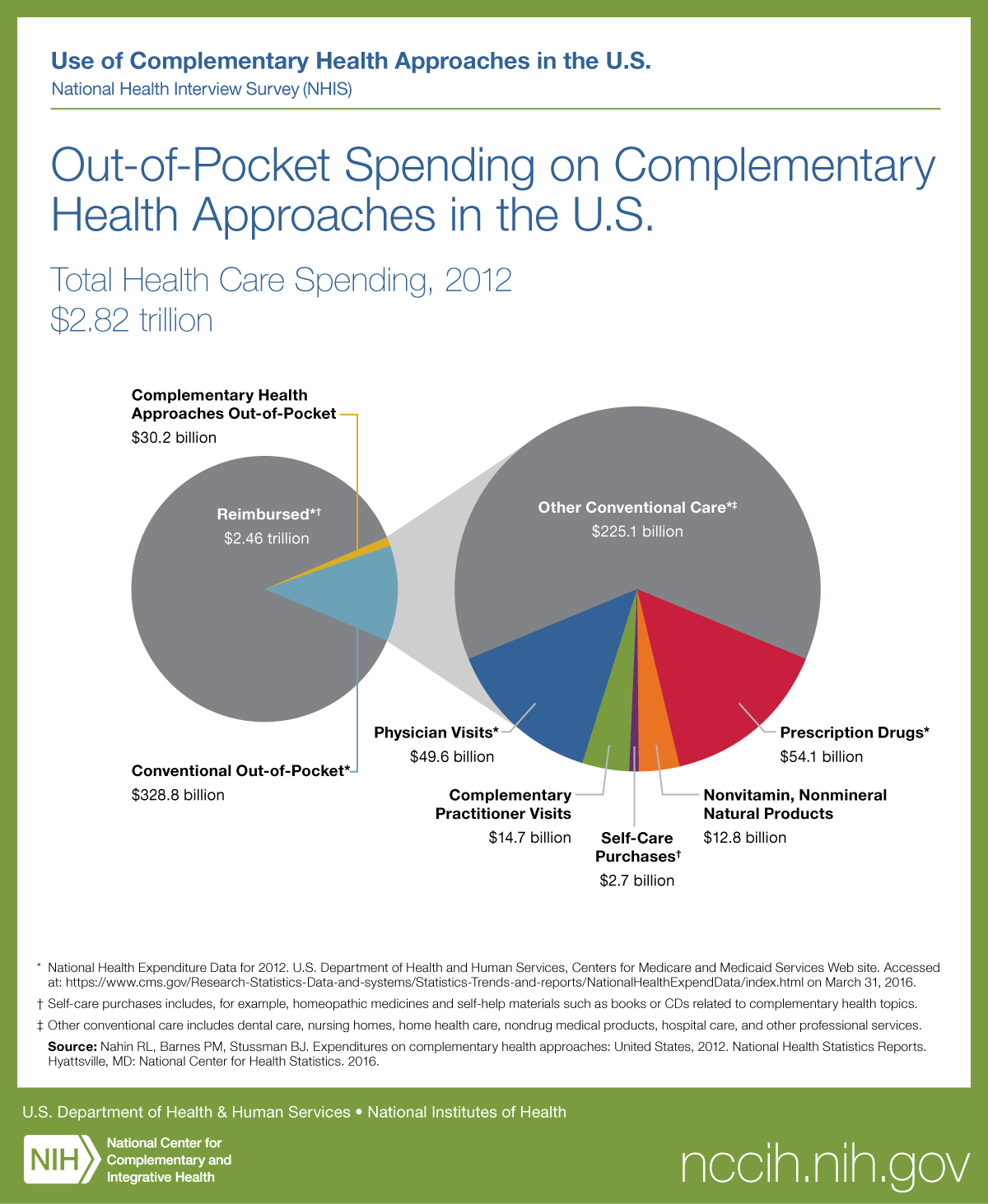
Figure 1 and Figure 2 Combined
Combined Total Health Care Spending and Out-of-Pocket Spending Graphic

* National Health Expenditure Data for 2007. U.S. Department of Health and Human Services, Centers for Medicare and Medicaid Services Web site. Accessed on June 25, 2009.
† Reimbursed spending includes employer and individual private insurance, Medicare, Medicaid, State Children's Health Insurance Program, other private and public spending,and some CAM.
‡ Other CAM includes yoga, tai chi, qi gongA component of traditional Chinese medicine that combines movement, meditation, and controlled breathing. The intent is to improve blood flow and the flow of qi. classes; homeopathic medicine; and relaxation techniques.
300 DPI images available for download
CAM's Part of Total Health Care Costs
At $33.9 billion, CAM accounts for approximately 1.5 percent of total health care expenditures and 11.2 percent of total out-of-pocket expenditures on health care in the United States. See Figure 1 above.
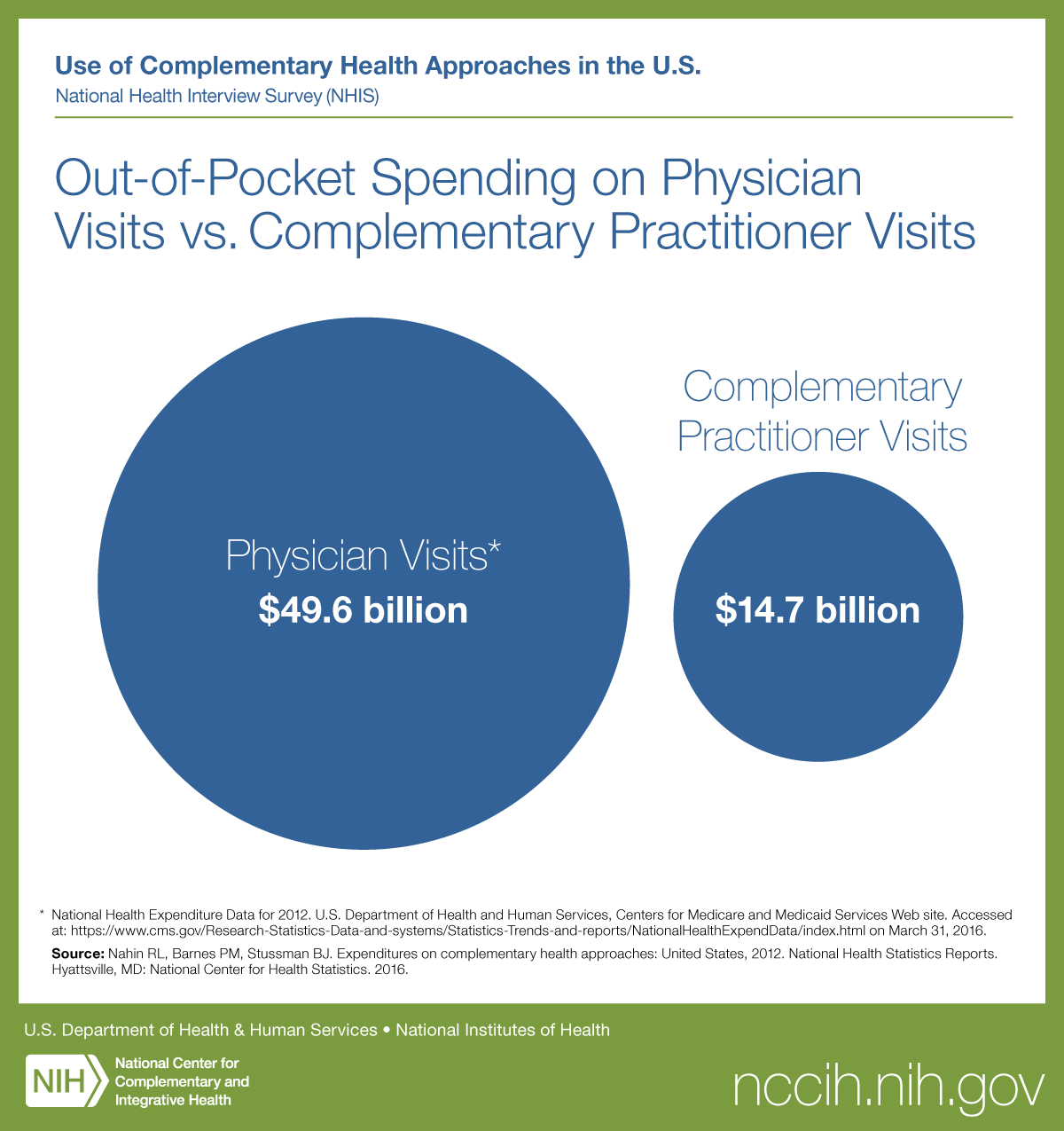
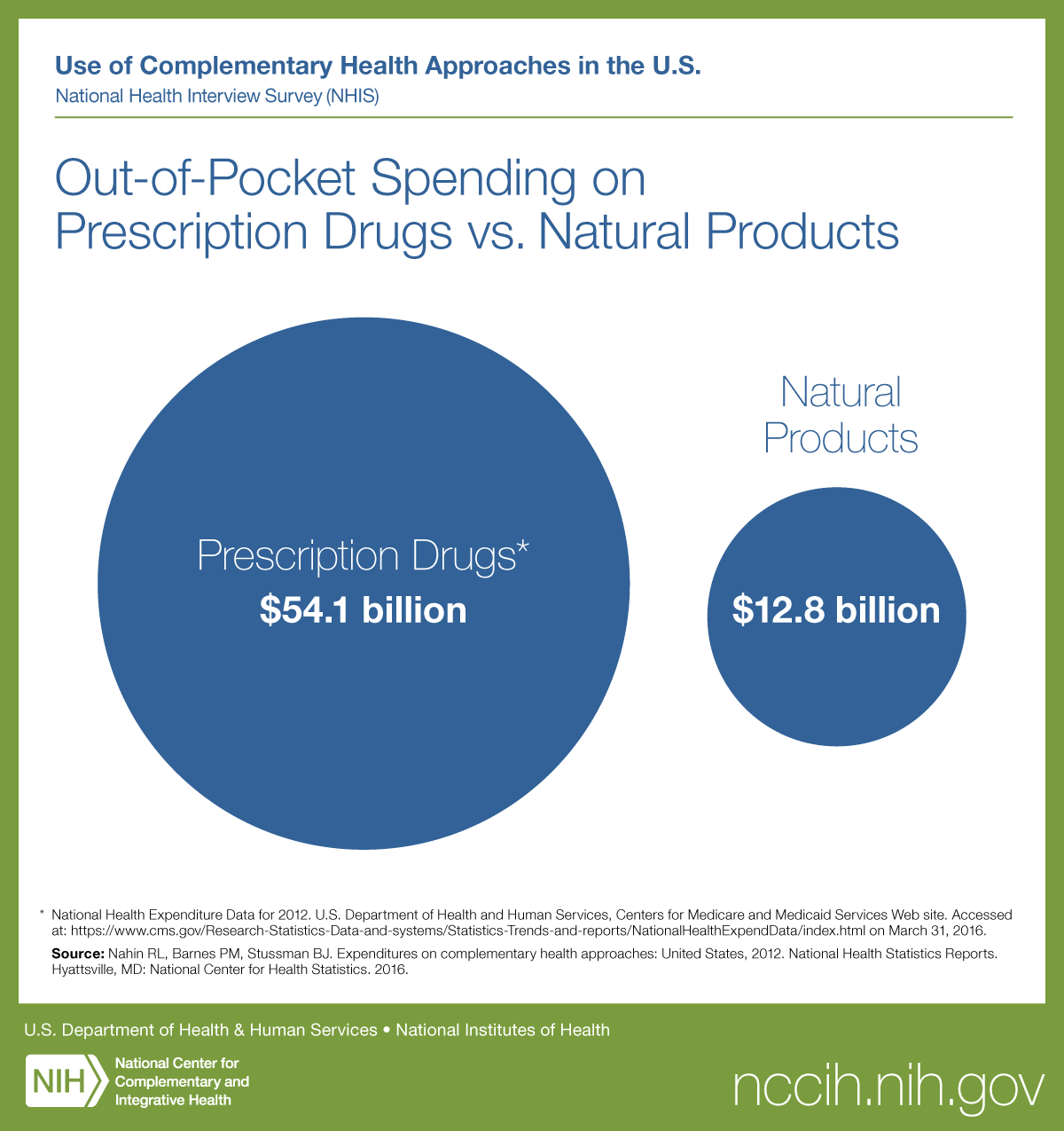
The $14.8 billion spent on nonvitamin, nonmineral, naturalproducts is equivalent to approximately one-third of totalout-of-pocket spending on prescription drugs ($47.6 billion), and the $11.9 billion spent on CAM practitioner visits is equivalentto approximately one-quarter of total out-of-pocket spendingon physician visits ($49.6 billion). See Figure 2 above.
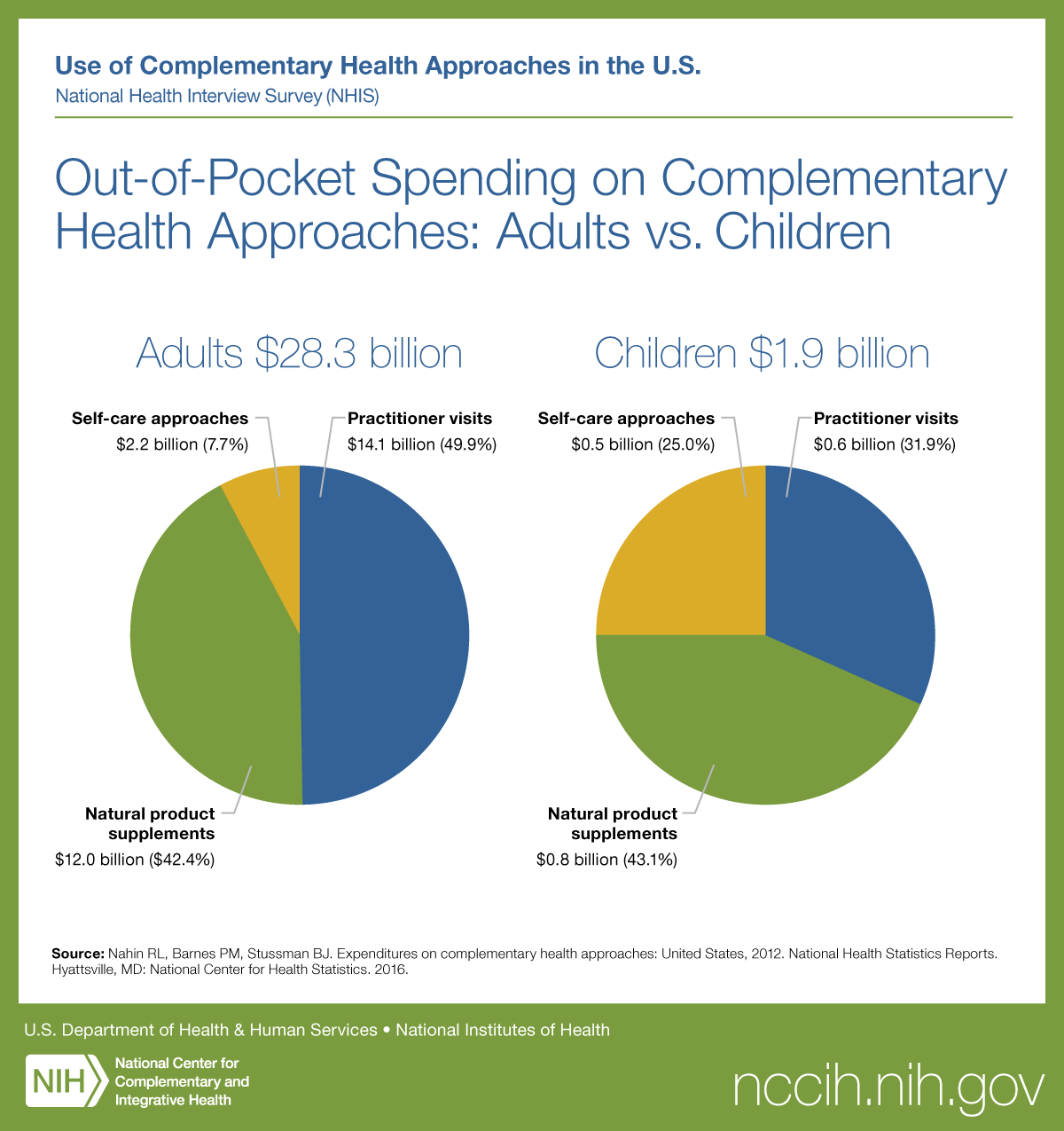
Figure 3 CAM Out-of-Pocket Spending: Self-Care* vs. Practitioner Costs

* Self-Care costs include CAM products, classes, and materials.
† Relaxation techniques include meditationA conscious mental process using certain techniques—such as focusing attention or maintaining a specific posture—to suspend the stream of thoughts and relax the body and mind., guided imageryAny of various techniques (such as a series of verbal suggestions) used to guide another person or oneself in imagining sensations—especially in visualizing an image in the mind—to bring about a desired physical response (such as stress reduction)., progressive relaxation, and deep breathing exercises.
300 DPI images available for download
Figure 4 Out-of-Pocket Costs for Select CAM Therapies*

* Totals for nonvitamin, nonmineral, natural products and homeopathyA whole medical system that originated in Europe. Homeopathy seeks to stimulate the body's ability to heal itself by giving very small doses of highly diluted substances that in larger doses would produce illness or symptoms (an approach called “like cures like”). include both CAM practitioner costs and costs of purchasing CAM products. Totals for massagePressing, rubbing, and moving muscles and other soft tissues of the body, primarily by using the hands and fingers. The aim is to increase the flow of blood and oxygen to the massaged area. and chiropractic and osteopathic manipulationA type of manipulation practiced by osteopathic physicians. It is combined with physical therapy and instruction in proper posture. are only CAM practitioner costs. Totals for yoga, tai chi, and qiIn traditional Chinese medicine, the vital energy or life force proposed to regulate a person's spiritual, emotional, mental, and physical health and to be influenced by the opposing forces of yin and yang. gong classes are only the cost of purchasing CAM products.
300 DPI images available for download
About NCCIH
The mission of NCCIH is to define, through rigorous scientific investigation, the usefulness and safety of complementary and integrative health interventions and their roles in improving health and health care.
To Obtain the Report
The report's citation is:
- Nahin RL, Barnes PM, Stussman BJ, and Bloom B. Costs of Complementary and Alternative Medicine (CAM) and Frequency of Visits to CAM Practitioners: United States, 2007. National health statistics reports; no 18. Hyattsville, MD: National Center for Health Statistics. 2009.
It is available, along with a press release and graphics, at nccih.nih.gov/news/camstats/NHIS.htm. People who do not have access to the Internet can contact the NCCIH Clearinghouse for a copy.
Additional Reports
NCCIH plans to collaborate with NCHS on further analyses of the survey findings. Among the areas of interest to the researchers are dietary supplements and reasons for CAM use. Future reports will be published by NCHS and posted on the NCCIH Web site.
For More Information
NCCIH Clearinghouse
The NCCIH Clearinghouse provides information on NCCIH and complementary and integrative health approaches, including publications and searches of Federal databases of scientific and medical literature. The Clearinghouse does not provide medical advice, treatment recommendations, or referrals to practitioners.
* Note: PDF files require a viewer such as the free Adobe Reader.